Post-AGI Capital: Investing for Human Sovereignty
When intelligence becomes abundant, sovereignty becomes scarce — and the most important investments preserve human freedom, independence, and optionality.
By The SOV Ventures Team
For centuries, capital has been used to amplify labor. Farmers bought plows, industrialists bought machines, and software founders bought servers.
AGI changes the equation. For the first time, intelligence itself is becoming abundant. When intelligence becomes abundant, many traditional forms of capital lose value while new forms become critical.
The central question for investors is no longer "How do I generate more output?" It becomes "How do I preserve agency in a world where output is effectively unlimited?"
The Scarcity Shift
Most economic value exists because intelligence is scarce. AGI makes software, research, design, marketing, and much of knowledge work dramatically cheaper. As with every technological revolution, value migrates to whatever remains scarce.
When intelligence becomes abundant, sovereignty becomes scarce. The most important investments of the next century may be those that preserve human freedom, independence, and optionality.
Sovereignty as an Asset Class
Sovereignty is the ability to make meaningful decisions independent of external control. AGI naturally favors concentration: the most powerful AI systems will likely be owned by a small number of governments and corporations.
The logical response is to invest in assets that decentralize power.
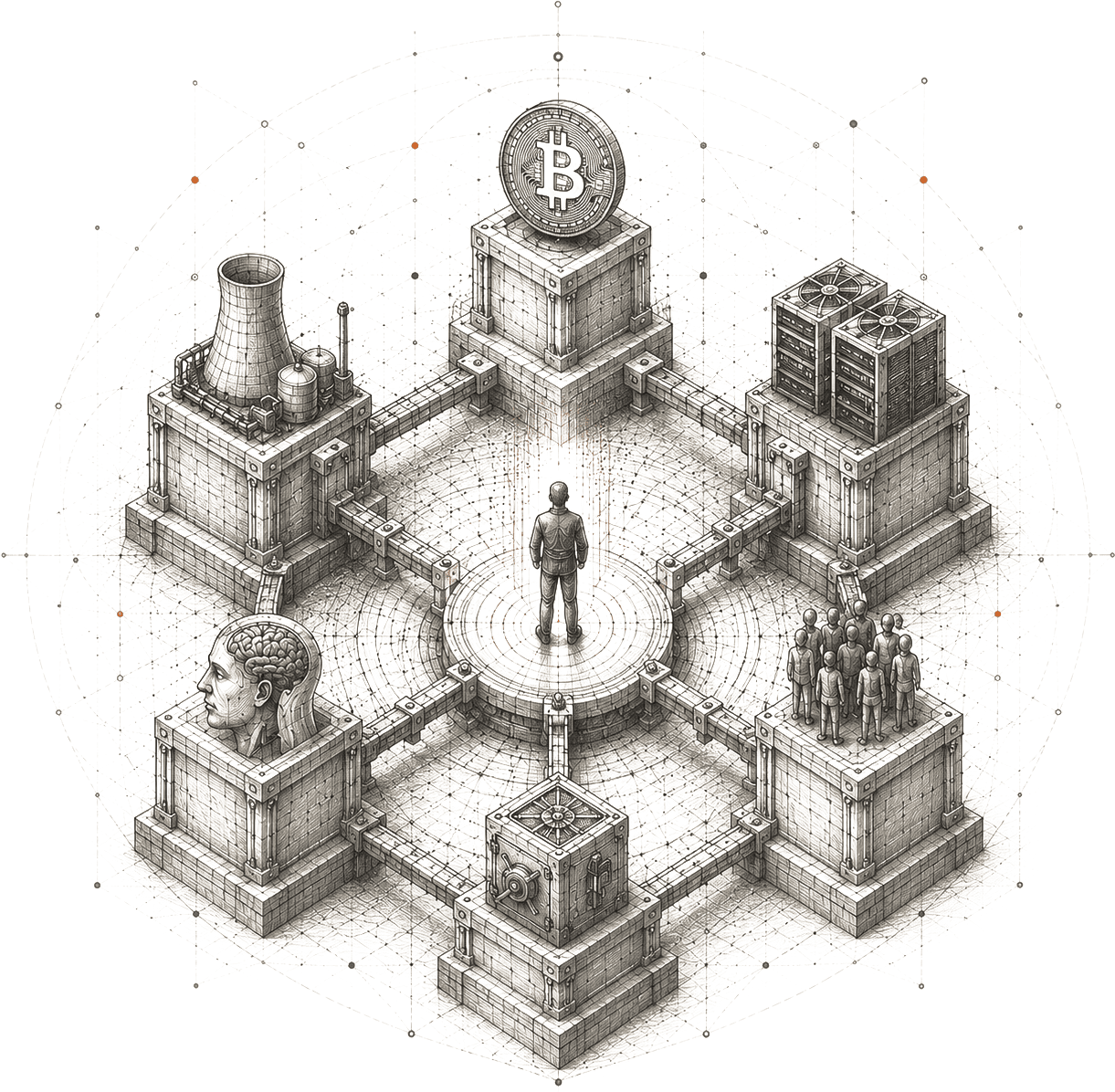
1. Bitcoin
Bitcoin may become the ultimate sovereignty asset. An AGI can create millions of businesses, products, and services. It cannot create more than 21 million Bitcoin.
As intelligence becomes abundant, credible monetary scarcity becomes more valuable. Bitcoin's role shifts from speculation to preserving property rights and financial independence.
2. Energy
Every AI system ultimately runs on energy. As compute demand grows, ownership of productive energy assets — from solar and storage to nuclear and microgrids — becomes increasingly strategic.
Owning energy means owning part of the foundation of machine civilization.
3. Compute
Most people today rent intelligence from cloud providers. In a post-AGI world, owning compute may become as important as owning land was in previous eras. Local AI systems provide privacy, resilience, and independence from centralized platforms.
4. Human Capital
Not all human skills become obsolete. As AI generates more options, the value of judgment, taste, leadership, trust, and narrative creation rises. The winners will be those who can direct vast amounts of machine intelligence toward meaningful goals.
5. High-Agency Communities
As AI reduces economic dependence between individuals, trusted communities become more important. Networks of aligned people provide opportunity, capital, resilience, and social cohesion — assets that remain difficult to automate.
A New Capital Allocation Framework
Traditional investors ask: "Will this asset generate returns?" Post-AGI investors should ask: "Will this asset increase my freedom of action?"
A sovereign portfolio may include:
- Scarce monetary assets
- Energy production
- Compute infrastructure
- Human capability development
- Strong communities
The goal is not merely wealth. It is maintaining the ability to make independent choices in a world increasingly shaped by artificial intelligence.
The Real Opportunity
The greatest risk of AGI is not that machines become smarter than humans. It is that humans become dependent on systems they do not control.
The purpose of post-AGI capital is therefore not maximizing financial returns alone. It is preserving the conditions under which free individuals can continue to shape their own futures.
The investors who recognize this early may not only outperform financially — they may help build the foundation of a sovereign civilization.