The Rise of the Generative Individual
As execution becomes abundant, novel generation becomes scarce — and the Generative Individual becomes a sovereign actor.
By The SOV Ventures Team
Execution Is Becoming Abundant
For most of human history, success was determined by access to scarce resources. First came land. Then capital. Then labor. Then information. Today, we are entering a new era where execution itself is becoming abundant.
A single individual can now generate software, marketing campaigns, legal documents, financial models, research reports, educational content, designs, and operational workflows at a scale that previously required teams of dozens or even hundreds. Generative AI is steadily reducing the cost of turning ideas into reality.
When execution becomes abundant, the value of execution falls. This creates an uncomfortable reality for many organizations: the capabilities that once differentiated them are becoming utilities.
The question is no longer "Can you build it?" The question is becoming "Can you imagine it?"
The New Scarcity
Every technological revolution creates a new scarcity. When information became abundant, attention became scarce. As execution becomes abundant, novel generation becomes scarce.
The individuals who thrive in the coming decades will not necessarily be the best programmers, operators, marketers, analysts, or managers. They will be the best generators — the people capable of producing a continuous stream of novel insights, questions, hypotheses, opportunities, business models, scientific discoveries, and strategic directions.
The winners will not be those who work faster. They will be those who generate more valuable possibilities.
From Knowledge Worker to Generative Individual
The defining archetype of the industrial age was the worker. The defining archetype of the information age was the knowledge worker. The defining archetype of the AI age is the Generative Individual.
A Generative Individual is someone who can repeatedly:
- Identify emerging opportunities before others see them.
- Connect unrelated ideas into new combinations.
- Generate high-quality questions.
- Form unique worldviews.
- Design new systems.
- Create new markets.
- Imagine futures that do not yet exist.
Execution increasingly belongs to machines. Direction remains human. While AI can produce millions of answers, it still requires someone to determine which questions matter.
Why Ideas Compound Faster Than Labor
Historically, productivity scaled linearly with effort. Work more hours. Produce more output.
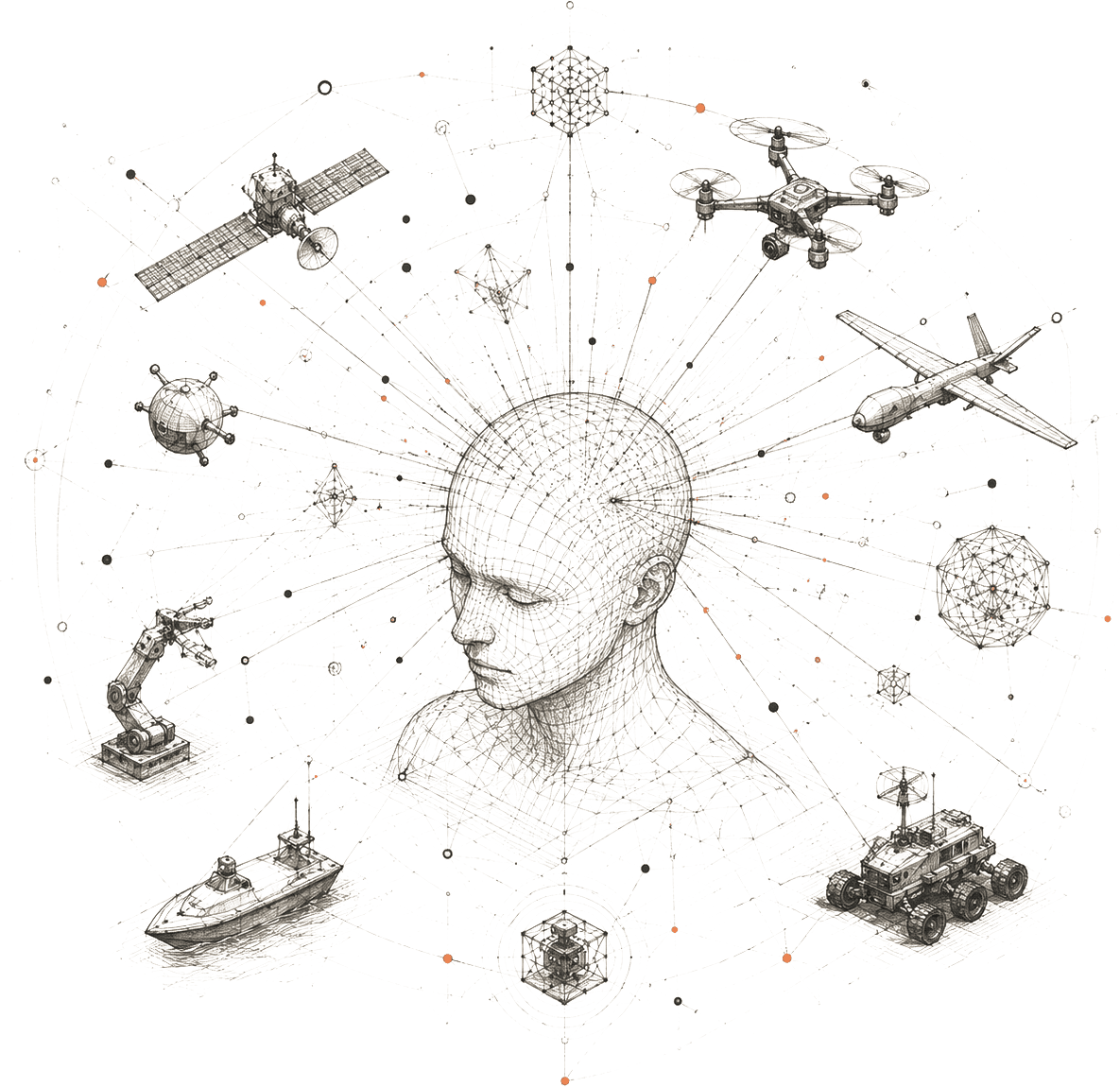
The Generative Individual operates differently. One valuable idea can be amplified by thousands of AI agents, software systems, robots, and automated workflows. A founder with a breakthrough insight may soon command the productive capacity of what once required an entire corporation.
This changes the economics of ambition. The bottleneck is no longer labor. The bottleneck is imagination.
The Sovereign Advantage
This shift has profound implications beyond economics. As institutions become increasingly automated and centralized, individuals gain unprecedented leverage. A single person can now access capabilities that were once reserved for governments, Fortune 500 companies, and elite research organizations.
This creates a new form of sovereignty. Not political sovereignty. Not merely financial sovereignty. Creative sovereignty — the ability to independently generate, test, and deploy ideas into the world without requiring permission from large institutions.
The Generative Individual becomes a sovereign actor. They are less dependent on employers, bureaucracies, gatekeepers, and traditional power structures. They can create their own opportunities.
Building a Generative Practice
Generation is not a talent. It is a discipline. The most successful individuals in the coming era will treat idea generation as seriously as athletes treat training.
They will cultivate:
- Deep curiosity.
- Broad intellectual exposure.
- First-principles thinking.
- Contrarian exploration.
- Rapid experimentation.
- Continuous learning.
Rather than consuming information passively, they will actively synthesize it. Rather than optimizing existing systems, they will seek to create new ones. Rather than asking how to compete, they will ask how to redefine the game.
The Future Belongs to Generators
The greatest misconception about AI is that it will make humans less important. The opposite may be true. As machines become increasingly capable of execution, human differentiation shifts toward imagination, judgment, taste, vision, and creativity.
The future may not belong to the largest organizations. It may belong to the individuals who can generate the most valuable ideas and rapidly direct autonomous systems toward their realization.
In a world where execution is abundant, generation becomes destiny. The defining skill of the twenty-first century may not be coding, management, finance, or even engineering. It may be the ability to continuously create new possibilities.
The future belongs to the Generative Individual.